Skip to content
Logo Biodiversity Call Card Game

ABOUT THE GAME

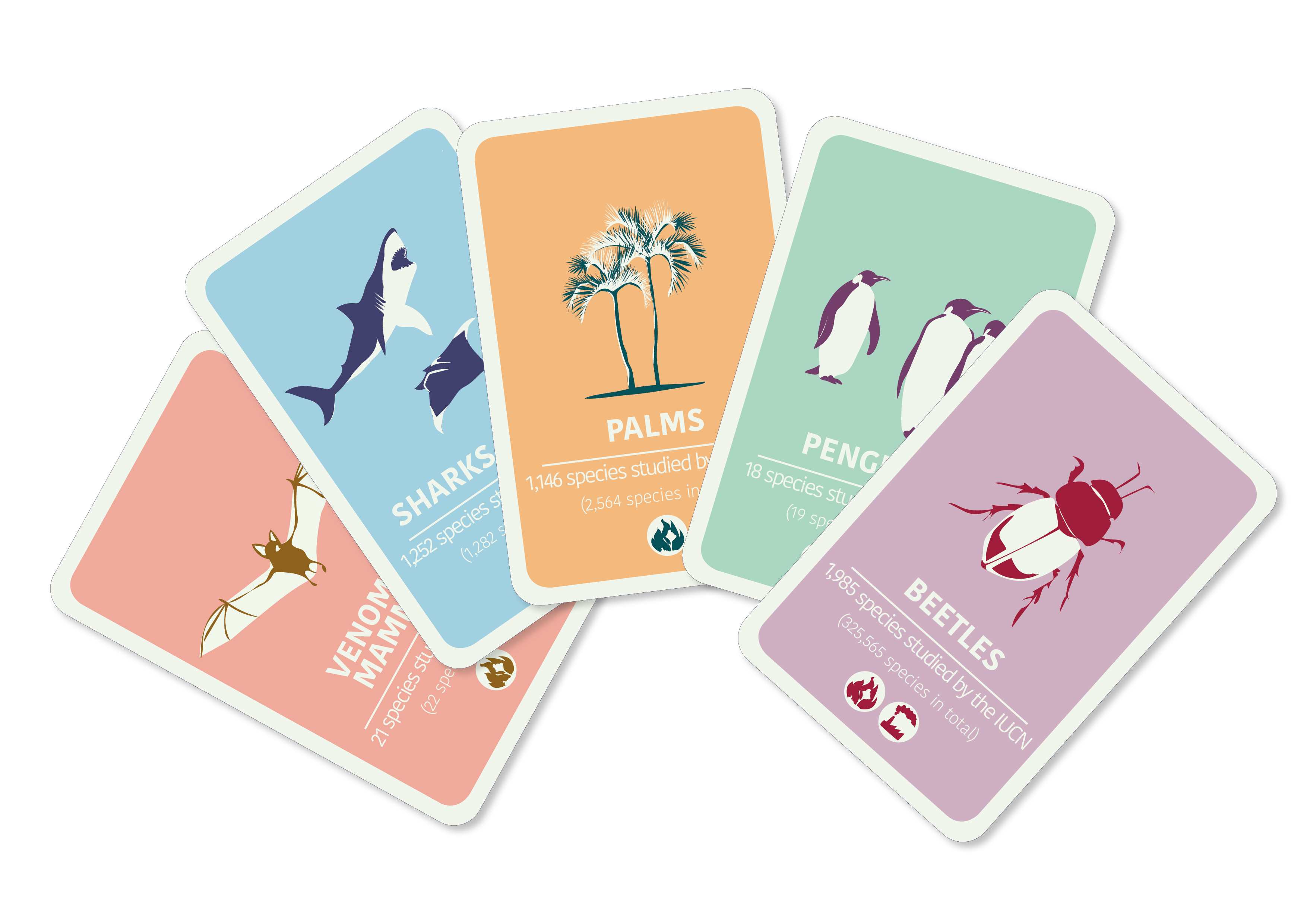
From big cats and whales to mosses and butterflies: How are Earth’s species really doing? The answers may surprise you! In Biodiversity Call, players discover how different species groups are coping — and what threatens their survival. Fast, visual, and based on real scientific data, the game uncovers which species are most at risk — and which factors are driving global biodiversity loss. 

The game is perfect for classrooms, families, and anyone curious about the state of the natural world. And the rules are so simple that it takes less than a minute to get started playing! 

Biodiversity Call was created in collaboration with Biodiversity and Ecosystem services in a Changing Climate (BECC); a strategic research area that engages about 350 researchers at Lund University and the University of Gothenburg in Sweden.  

Biodiversity Call is published by Klimatkoll Guldheden AB in Sweden. The first edition was published in 2025.

LAYOUT & ILLUSTRATIONS: Yrsa Dahlman
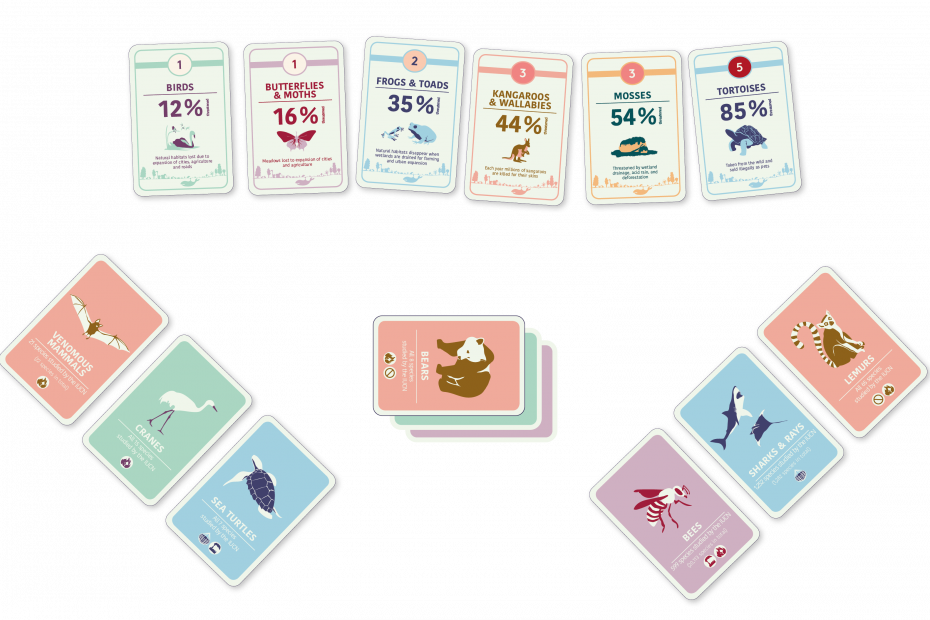
Table set to play Biodiversity Call

EXPLORE BECC RESEARCH

The game includes 9 multiple-choice questions that highlight BECC research and how human actions affect biodiversity and climate change. Questions are designed to spark discussions — from “Which pollinators increase harvests most?” to “What happens when peatlands are drained?”.

The question cards are used at the beginning of each round.

Curious to know more?

We’ve built an AI chatbot trained on BECC research. Use it to explore the studies behind the question cards, ask your own questions, and discover how human activities affect biodiversity and ecosystems!

HOW IS BIODIVERSITY CALL PLAYED?

One round takes about 15 minutes and is played by two teams of 1–3 players per team. The game is suitable for players 12 years and older. 

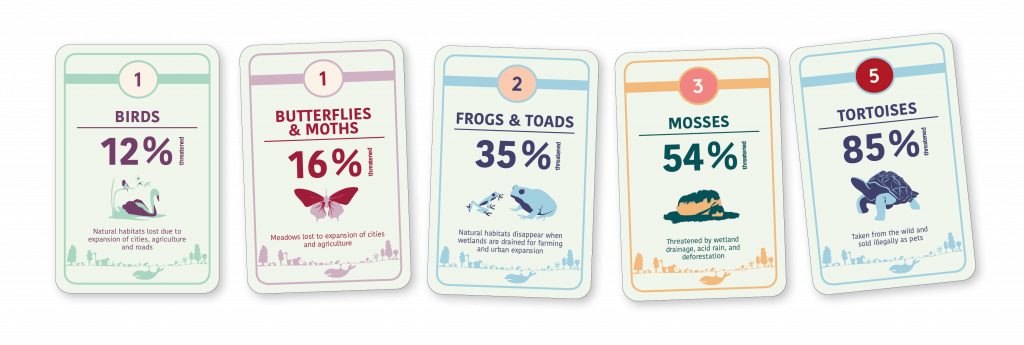
The aim of the game is to sort species groups in the correct order — from least (1) to most threatened (5). The percentages printed on the cards show how many species in that group are considered threatened (Vulnerable, Endangered, or Critically Endangered) according to the IUCN Red List. The threat levels (1–5) are our way of grouping the percentages into simpler categories for the game. Cards should be ranked based on threat level.   

Each round also includes an optional quiz question that illustrates the links between human action, effects on biodiversity and climate change.

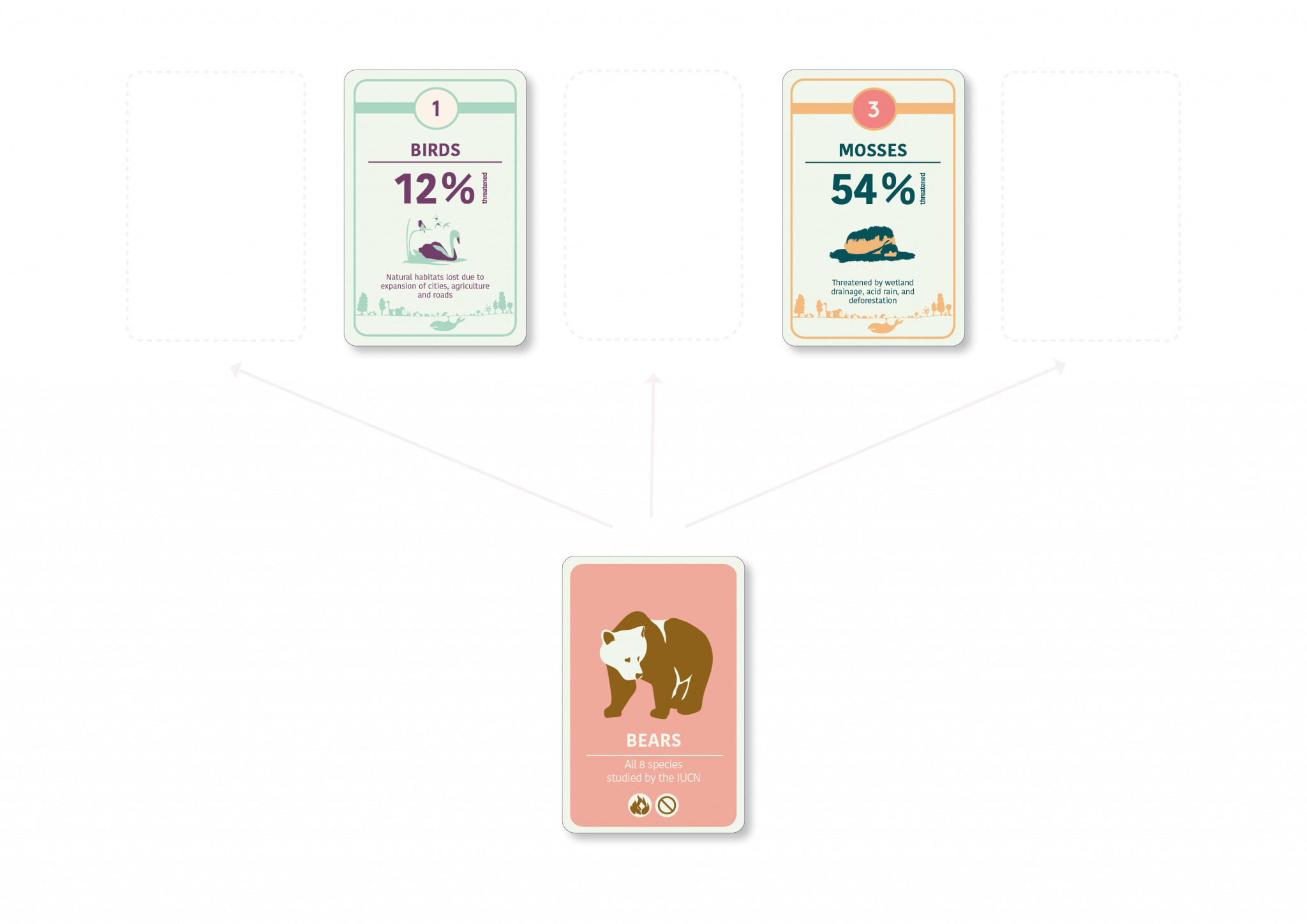
Biodiversity call, the row of threathened species.

PREPARE

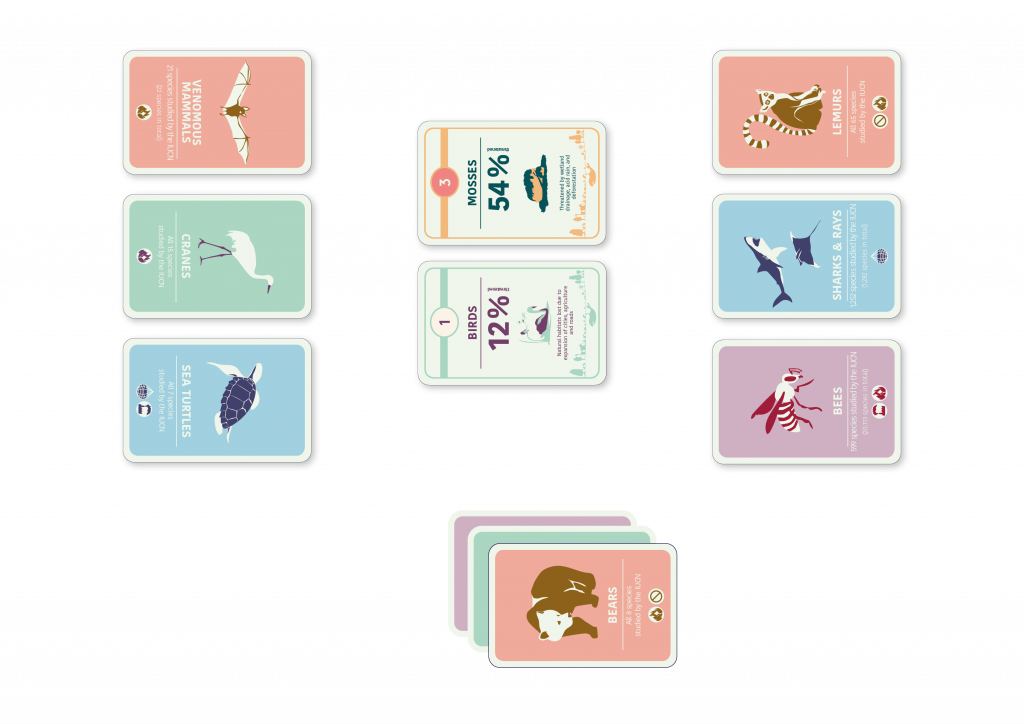
1. Play individually or in two teams. Place three cards in a row, face up (the colorful side), in front of each team. The remaining cards are placed in a pile on the side.

2. Place two cards, face down, to start the row of threatened species groups. Players will place their cards here in order from the least (1) to the most threatened group (5).

3. Draw a Question card, read it, and let the other team answer. Correct? Nothing happens. Wrong? They must draw another game card and hence start with 4 cards.

How to play Biodiversity Call

PLAY 

One team starts by guessing where one of their cards belongs on the row of threatened species groups. Turn it over and reveal its threat level (1–5). 

Correct? The card stays in the row of species groups. The turn passes to the next team.

Wrong? The card is set aside. The team draws a new card. The turn passes to the other team.

The first team to get rid of all their cards wins! 

How should the cards be ranked?

The cards don’t need to be ranked by percentage, only by threat level. Note also that there can be gaps between levels – a card with threat level 5 can be placed to the right of a threat level 3 card without a threat level 4 card needing to be placed first.

Too easy?

Want to try a more challenging version? Try ranking the cards by their exact percentages!

Surprised by some cards?

Have you reacted to any of the cards? You’re not alone. Several species groups in Biodiversity Call surprise many players – their threat levels seem low compared to what people may have heard or read. The explanation often comes down to the fact that it is the sizes of populations that have declined sharply, rather than individual species being endangered. Click on the species below to learn more!

At 25%, cod fish have a lower threat level than many would expect. In Sweden, for example, cod is often highlighted as a species in crisis (see e.g. the 2026 edition of the Swedish Red List). The explanation is that the game cards are based on the IUCN’s global Red List, where the cod fish group is assessed as a whole, and where the majority of the studied species (8 in total) are not classified as endangered. However, the populations of the commercially important cod species have declined dramatically, due to overfishing and increasingly warmer waters.

Insects are in crisis, but the crisis is primarily about drastically declining populations, not species going extinct on a large scale. That is why 19% may feel surprisingly low. At the same time, 19% is likely an underestimate of the true situation. Of nearly 1 million known insect species, IUCN has only assessed around 13,000 – and among the unstudied species, a greater proportion are likely threatened. A key reason for population decline is the loss of habitats. One example: since the late 1920s, the meadow area in Sweden has decreased from over 500,000 hectares to around 12,000 hectares, which has hit bees and other pollinators hard. A similar development has taken place in many other countries.

Stony corals have a lower threat level than the media narrative often suggests (37% of known species are threatened), but the situation for coral reef ecosystems is nonetheless deeply serious. Half of the world’s coral populations are estimated to have disappeared over the past 150 years. The greatest threat is rising ocean temperatures, which cause coral bleaching – a condition in which corals lose the algae they live in symbiosis with and starve to death. Ocean acidification, which occurs as the oceans absorb more carbon dioxide, further impairs corals’ ability to form their calcium skeletons.

EDUCATIONAL MATERIALS FOR TEACHERS

We have developed a suggested lesson plan (teacher’s guide) and a set of classroom exercises to help teachers use Biodiversity Call in the classroom. The material can be used to explore biodiversity, biology, and ecosystems in an engaging, interactive, and student-centered way, for ages 12 and up.

Distribution of games to teachers 

During 2026, thousands of games will be distributed to teachers all over Sweden, as well as to Swedish nature centers and botanical gardens worldwide as part of a project funded by the research network BECC. The game is, of course, also available for purchase in our webshop with global shipping! 

HELP BIODIVERSITY!

When playing Biodiversity Call, you may realize that far too many species are under pressure — from climate change, pollution, over exploitation, habitat destruction, and other threaths. And you might ask yourself: “What can I do to help nature thrive, and what should I avoid doing?”

We’ve put together a set of practical tips to get you started. Some are easy to implement at home or at your school or workplace, others are ways to get involved in your community. Click on the button to start exploring, and perhaps most important — spread the knowledge!