LESSON WITH BIODIVERSITY CALL
AGES: 12+
TIME: 50-60 min
SUBJECTS: Biology, Environmental science, Geography, Social science
LEARNING OBJECTIVES: Students develop a deeper understanding of biodiversity and what it means for species to be threatened. They explore the remarkable variety of species that inhabit our planet, gain insight into how human activities affect ecosystems and species survival, and learn about the various challenges species face.
MATERIALS: A Teaching Kit of the card game Biodiversity Call consisting of 5 games (sufficient for 30 students).
Before the lesson (approx. 10 min)
- Read through the rules of the game.
- Open a deck and familiarize yourself with the cards.
- Prepare the classroom by arranging tables for gameplay (or let the students do it).
- Review this lesson guide and look through the exercises (see below). Consider selecting 1–2 exercises to do after playing!
During the lesson (50–60 min)
1. Introduce the game
Set the scene: tell students they’re about to find out how Earth’s species are really doing through an interactive, research-based card game.
2. Play Biodiversity Call in small groups
- Divide the class into groups of 2–6 students (two teams per game, 1–3 students per team).
- Explain the rules. They are available on the rule cards included in the game and here on the website.
- Distribute one deck to each table and let the students hand out the cards according to the rules.
- Let the game start!
Move around the classroom while the students are playing. Answer questions and encourage them to justify their placements based on what they think influences the species’ threat levels. Groups that finish early can play another round. One round takes approx. 15 minutes.
3. Reflection and discussion
After the game, reflect as a whole class on the thoughts and discussions that emerged. Suggested discussion questions while the cards remain on the tables:
- What did you learn from the game?
- Did anything surprise you?
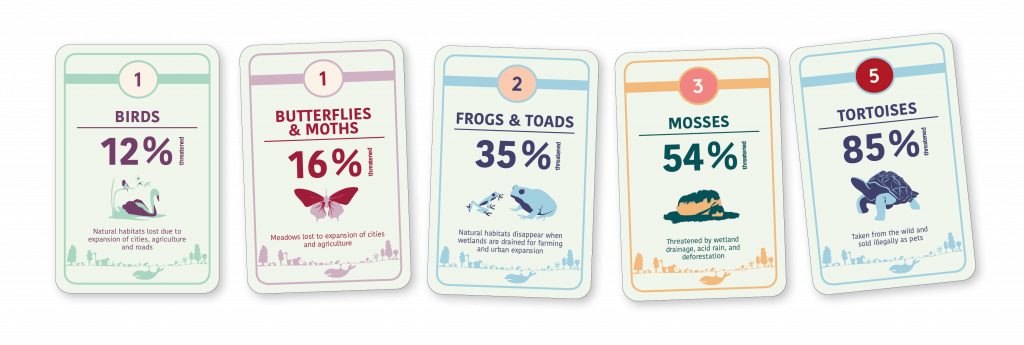
- Why do you think some species groups have a higher proportion of threatened species than others?
Note: Many students are surprised by the relatively low percentages for cod fish, bees, and stony corals, as these groups are often highlighted in media discussions. However, in these cases it is primarily population sizes that have declined dramatically, rather than entire species being classified as endangered.
Conclude by reviewing and discussing the card about actions individuals can take — and avoid — to help protect biodiversity (included in the deck and also available online).
4. Do one or more exercises
If time allows at the end of the lesson (or during the next lesson): select one or more of the exercises that accompany the game (found by clicking the button below). If time is limited, you may choose to only give the students the home assignment.